 ChronoPill
Traveling to the United Kingdom with medication
The United Kingdom lets a visitor carry up to a 3-month supply of medicines containing controlled drugs of schedules 2 to 4 (part I), lawfully prescribed in the country of residence, with a letter from the prescriber; schedule 1 drugs cannot enter without a Home Office licence, and the customs guide lists controlled drugs among goods that are seized. The UK's declared rules for travellers are filed with the INCB (11 March 2024). Here is what the official sources say, and who to ask.
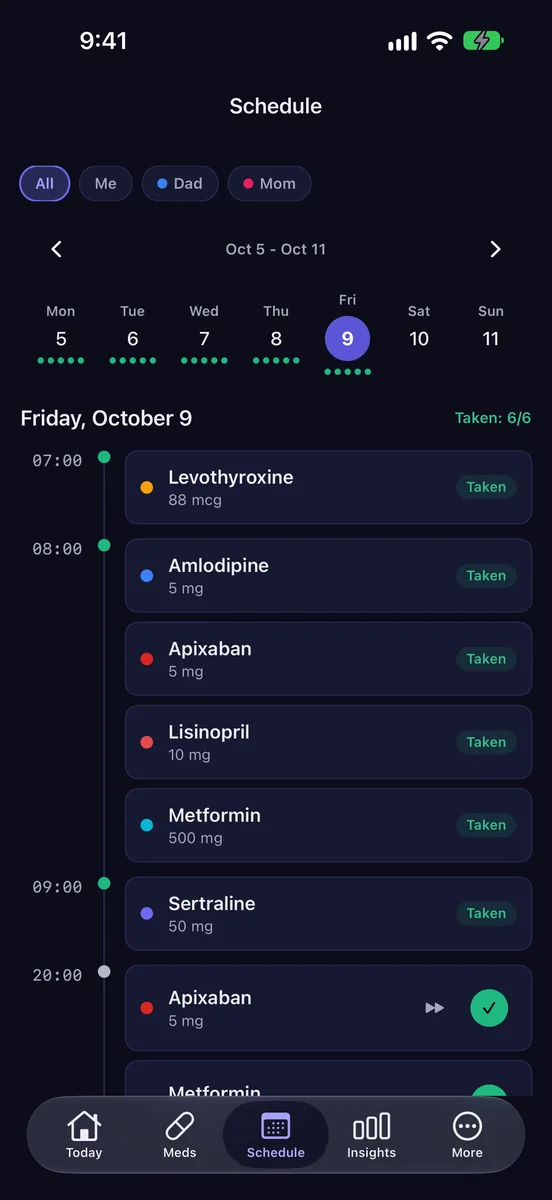
Traveling with medication? ChronoPill flags the internationally controlled substances in your list and, after a time-zone change, asks whether to keep your usual dose times. Travel Mode is part of ChronoPill Premium.
Download ChronoPillRead the filing (PDF)
The United Kingdom's own declared rules for travellers carrying controlled medicines, including the required documents, live in the country's official INCB filing (11 March 2024): read the filing (PDF). This page summarizes context around it; the filing and the national authorities it names are authoritative.
Substances worth checking before you pack
Source: the Home Office list of the most commonly encountered drugs controlled under the misuse of drugs legislation (updated 1 April 2025), which gives each substance its class under the Misuse of Drugs Act 1971 (A, B or C) and its schedule under the Misuse of Drugs Regulations 2001 (1 to 5). For a traveller the schedule is what counts: the Home Office personal import policy covers up to a 3-month supply of schedule 2 to 4 (part I) medicines and the medicines of schedules 4 (part II) and 5, while schedule 1 drugs need a licence. A starting point for your pharmacist, not a ruling.
| Active substance | Status in UK law (class and schedule) | What the official guidance says |
|---|---|---|
| Morphine, oxycodone, fentanyl, methadone, hydrocodone | Class A, schedule 2 (morphine: also schedule 5 in a preparation of not more than 0.2 percent morphine from which it cannot readily be recovered) | Visitors: up to a 3-month supply, lawfully prescribed and dispensed in the country of habitual residence, carried on your person with a letter from the prescriber; more than that is seized unless a licence was granted beforehand for exceptional circumstances. INCB Yellow List. |
| Codeine, dihydrocodeine, pholcodine | Class B (class A in a preparation for injection), schedule 2; schedule 5 when a non-injectable preparation holds not more than 100 mg per dosage unit, or not more than 2.5 percent in an undivided preparation | Same 3-month rule; schedule 5 medicines are also covered by the personal import policy, with the letter recommended in all cases. Common in cough and cold products. INCB Yellow List. |
| Tramadol, pregabalin, gabapentin | Class C, schedule 3 | Same 3-month rule. Not on the INCB lists. |
| Diazepam, alprazolam, lorazepam, clonazepam, zolpidem | Class C, schedule 4 part I | Same 3-month rule. INCB Green List. |
| Temazepam, midazolam, phenobarbital | Class C, schedule 3 (phenobarbital: class B, schedule 3) | Same 3-month rule. INCB Green List. |
| Methylphenidate, amfetamine, dexamfetamine, lisdexamfetamine | Class B, schedule 2 (the list names amphetamine, lisdexamphetamine and methylphenidate, amphetamine and methylphenidate becoming class A in a preparation for injection; dexamfetamine is not named, and the list says stereoisomers are controlled where the legislation states it) | Same 3-month rule. Methylphenidate, amfetamine and dexamfetamine: INCB Green List; lisdexamfetamine not listed. |
| Buprenorphine | Class C, schedule 3 | Same 3-month rule. INCB Green List. |
| Ketamine | Class B, schedule 2 | Same 3-month rule. Not on the INCB lists. |
| Modafinil | Not on the controlled drugs list | For a medicine without a controlled drug, the Home Office refers travellers to the import rules of the Medicines and Healthcare products Regulatory Agency (MHRA); the sources consulted state no quantity. Not on the INCB lists. |
| Pseudoephedrine, ephedrine | Not on the controlled drugs list; in the UK no more than 720 mg of pseudoephedrine or 180 mg of ephedrine may be sold without a prescription (MHRA) | Not addressed by the traveller texts consulted. INCB Red List. |
| Cannabis, THC and CBD products | Cannabis, cannabis resin, cannabinol and THC: class B, schedule 1; cannabis-based products for medicinal use in humans (CBPMs): schedule 2 since 1 November 2018; Sativex: schedule 4 part I; Epidyolex, whose active substance is cannabidiol: schedule 5 | Schedule 1 drugs cannot be brought into the UK without a licence, which is limited to research or other special purposes; a Schengen certificate is not accepted instead. The INCB filing admits CBPMs only when prescribed to the traveller by a clinician and meeting the definition of the 2018 regulations, with a clinician's letter setting out how the definition is met. For other CBD products, TravelHealthPro states that cannabidiol (CBD) products are legal in the UK; the Home Office traveller texts consulted do not name them. Cannabis: INCB Yellow List. |
| Testosterone and other anabolic steroids | Class C, schedule 4 part II | Medicines of schedule 4 part II are covered by the personal import policy when lawfully prescribed and dispensed to you and carried on your person. Not on the INCB lists. |
Classes and schedules: Home Office list of the most commonly encountered controlled drugs, updated 1 April 2025, read on 4 November 2026. International status: INCB Yellow, Green and Red Lists (editions in Sources), extracted 31 May 2026.
Advance procedures: the Home Office personal import policy and the Drugs and Firearms Licensing Unit
The United Kingdom runs no permit for visitors: the Home Office personal import policy lets medication containing controlled drugs be carried on your person when you visit the UK, without a licence, in certain circumstances. It covers up to a 3-month supply of schedule 2 to 4 (part I) drugs in the form of a medicinal product lawfully prescribed in your country of habitual residence, and the medicines of schedules 4 (part II) and 5. The medicines must have been lawfully prescribed and dispensed to you and carried on your person; GOV.UK adds that they travel in your hand luggage and may be taken away at the border if you cannot prove they were prescribed for you. The Home Office recommends a letter from your doctor or prescribing clinician, which you may need to show at the border: your name, the dates you travel to or from the UK, the medicines with quantities, doses, strength and frequency, so that the letter and your travel dates show you carry no more than a 3-month supply, and the signature of the prescriber with their professional registration details. Medicines cannot be posted to you from overseas: they would be seized. Temporary residents and visitors staying longer than 3 months should travel with up to a 3-month supply and obtain further supplies from a UK clinician, whose services and prescriptions may be charged; a medicine not licensed in the UK can still be prescribed there as a 'special'. Only exceptional circumstances open the way to a personal licence for more than 3 months: an e-mail to the Drugs and Firearms Licensing Unit (DFLU) 1 month before travel giving the medicine and the controlled drugs it contains, the dose, strength and total quantity, the full travel details, your UK address and the purpose of the visit, why the circumstances are exceptional, proof that you may legally leave your home country with these quantities, and a letter from your clinician with their professional registration number explaining why the medicine cannot be obtained in the UK; the cost of UK healthcare or medicines is unlikely to count as exceptional, and incomplete requests are rejected. The Home Office states no fee and no processing time for this licence in the sources consulted. Schedule 1 drugs cannot be imported without a licence in any circumstances, licences being limited to research or other special purposes, and a Schengen certificate is not valid instead.
Other official texts complete the picture. GOV.UK's guide to bringing goods into the UK for personal use lists controlled drugs among the goods that cannot be brought into the UK and are seized, and asks travellers to declare banned or restricted goods before crossing the border; the Home Office policy above is the route for lawfully prescribed medicines carried with proof. The Home Office also reminds travellers that many controlled drugs are not normally prescribed in quantities greater than 1 month's supply and that they should check they may lawfully take their medicine out of the country where they live; UK residents prescribed controlled drugs abroad are not covered by the policy and must e-mail the DFLU to return with them. For a medicine without a controlled drug, the import rules are those of the MHRA. Leaving the UK with a controlled medicine, you should be able to prove it is yours with a prescription or a clinician's letter; other countries have their own import laws, and the DFLU answers questions about leaving the UK. TravelHealthPro, the site of the National Travel Health Network and Centre (NaTHNaC), to which the NHS website's page on taking medicines abroad redirects, advises original pharmacy packaging, a copy of the prescription, a letter from the prescriber naming the medicines by their generic names, and medicines in hand luggage. The French foreign ministry notes that possession and use of narcotics, so-called soft drugs included, are punishable by fines or prison and that trafficking is severely punished. The Drugs and Firearms Licensing Unit (dflu.ie@homeoffice.gov.uk, 0300 105 0248) and the British embassy or consulate in your country can state which rule applies to you.
Checklist for the United Kingdom
- List the active substance (INN) of every medication you plan to carry, prescription and over-the-counter alike.
- Ask your pharmacist which of them contain a controlled drug and in which schedule it sits (the Home Office list gives class and schedule), and whether you may lawfully take them out of your own country.
- Read the UK's official INCB filing (linked above): the 3-month supply for visitors, the contents of the letter, schedule 1 drugs and cannabis-based medicines.
- Carry a letter from your prescriber with your name, your travel dates, each medicine with quantity, dose, strength and frequency, and the prescriber's signature and professional registration details; keep the medicines on your person, in hand luggage, in original packaging, within a 3-month supply.
- For a schedule 1 drug, contact the Drugs and Firearms Licensing Unit (dflu.ie@homeoffice.gov.uk) before you travel; if exceptional circumstances mean you need more than a 3-month supply, e-mail it 1 month before travel with the supporting documents; never have medicines posted to you in the UK, they are seized.
- Staying longer than 3 months, plan an appointment with a UK clinician before your supply runs out; services and prescriptions may be charged.
- For any doubt, the Drugs and Firearms Licensing Unit and the British embassy or consulate in your country are the authoritative contacts before departure.
How ChronoPill's Travel Mode helps
ChronoPill offers the official medication databases of 7 countries as offline packs: 500,000+ records, downloaded once, then usable without a connection. When you set a destination, Travel Mode:
- Flags medications in your list whose active substance is internationally controlled, and names the substance
- Lists the products with the same active substance (INN) in the destination's official registry, with their local names, for information only
- Generates a pharmacist card you can hand over at any counter abroad
- After a time-zone change, asks whether to keep your usual clock times or the same moments as at home
Travel alerts are informative only: they tell you which substance to verify and with whom (your pharmacist, the destination's consulate). They never tell you to skip a dose or leave a medication behind. Travel Mode is part of ChronoPill Premium.
Frequently asked questions
Is codeine controlled in the United Kingdom?
Yes: codeine is a class B drug in schedule 2 of the Misuse of Drugs Regulations 2001; a non-injectable preparation with not more than 100 mg per dosage unit, or not more than 2.5 percent in an undivided preparation, falls in schedule 5. Codeine is also on the INCB Yellow List.
The Home Office personal import policy covers up to a 3-month supply of schedule 2 medicines lawfully prescribed in your country of residence, and the medicines of schedule 5, carried on your person with a letter from the prescriber. Ask your pharmacist which of your products contain codeine, cough and cold products included.
How much medicine can a visitor bring into the United Kingdom?
Up to a 3-month supply of medicines containing schedule 2 to 4 (part I) drugs, lawfully prescribed and dispensed in your country of habitual residence and carried on your person, with a letter from the prescriber (name, travel dates, medicines with quantities, doses, strength and frequency, signature and professional registration details); the medicines of schedules 4 (part II) and 5 are covered too. More than a 3-month supply, or medicines posted to you, are seized.
For a longer stay, the Home Office expects you to consult a UK clinician; a licence to import more is considered only in exceptional circumstances, on an e-mail to the Drugs and Firearms Licensing Unit 1 month before travel with full supporting documents. The Home Office states no fee and no processing time for it in the sources consulted.
Are ADHD medications restricted in the United Kingdom?
Methylphenidate, amphetamine and lisdexamfetamine are class B drugs in schedule 2 of the Misuse of Drugs Regulations 2001; dexamfetamine is not named in the Home Office list, which says stereoisomers are controlled where the legislation states it. Methylphenidate, amfetamine and dexamfetamine are on the INCB Green List; lisdexamfetamine is not listed.
The same personal import policy applies: up to a 3-month supply prescribed in your country of residence, carried on your person with the prescriber's letter. Discuss your trip with your prescriber, and check that you may lawfully take the medicine out of your own country.
Can I bring medical cannabis or CBD products into the United Kingdom?
Cannabis, cannabis resin, cannabinol and THC are schedule 1 drugs: they cannot be brought into the UK without a Home Office licence, which is limited to research or other special purposes, and a Schengen certificate is not valid instead. Cannabis-based products for medicinal use in humans (CBPMs) have been in schedule 2 since 1 November 2018; the UK's INCB filing admits them only when prescribed to the traveller by a clinician and meeting the definition of the 2018 regulations, with a clinician's letter setting out how the definition is met. Sativex is in schedule 4 part I and Epidyolex, whose active substance is cannabidiol, in schedule 5.
For other CBD products, TravelHealthPro states that cannabidiol (CBD) products are legal in the UK; the Home Office traveller texts consulted do not name them. Before packing any cannabis-derived product, write to the Drugs and Firearms Licensing Unit.
Sources
Sources of every claim on this page, each consulted on 2026-11-04; INCB list membership extracted on 31 May 2026.
- INCB filing, United Kingdom, 11 March 2024: official PDF (English) · country index. Consulted 2026-11-04.
- GOV.UK, Home Office: Take medicine in or out of the UK (page undated) · Travelling with medicine containing controlled drugs, guidance published 16 August 2019, last updated 11 April 2023. Consulted 2026-11-04.
- Home Office: List of most commonly encountered drugs currently controlled under the misuse of drugs legislation, updated 1 April 2025. Consulted 2026-11-04.
- legislation.gov.uk: Misuse of Drugs Regulations 2001 (schedules 1 to 5) · Misuse of Drugs Act 1971. Consulted 2026-11-04.
- GOV.UK, Bringing goods into the UK for personal use: Banned and restricted goods · Overview, declaring goods to customs. Consulted 2026-11-04.
- Medicines and Healthcare products Regulatory Agency, Drug Safety Update, 21 June 2017: Pseudoephedrine and ephedrine: regular review of minimising risk of misuse in the UK. Consulted 2026-11-04.
- European Medicines Agency: Epidyolex, product page (active substance cannabidiol). Consulted 2026-11-04.
- TravelHealthPro, National Travel Health Network and Centre (NaTHNaC): Medicines and travel, last updated 24 October 2025; the NHS website's question page on taking medicines abroad redirects to it. Consulted 2026-11-04.
- France, Ministère de l'Europe et des Affaires étrangères, Conseils aux voyageurs Royaume-Uni, updated 28 October 2026: Santé · Informations utiles. Consulted 2026-11-04.
- INCB Yellow List, 64th edition: official PDF · list page
- INCB Green List, 2026 edition: official PDF · list page
- INCB Red List (precursors): official PDF · list page
ChronoPill is not a medical device and this page is not legal or medical advice. It is an informational summary of publicly available regulatory sources. Rules change, and the only authoritative answers come from the destination country's authorities. Before traveling, confirm every point that matters to you with your pharmacist and with the destination country's consulate or embassy.