 ChronoPill
Traveling to Japan with medication
Japan applies some of the most closely watched medication import rules of any major destination. Several substances that are routine prescriptions elsewhere are regulated under Japan's Narcotics and Psychotropics Control Act or Stimulants Control Act, and some require paperwork before you fly. Here is what to check, where the official answers are published, and who to ask.
Traveling with medication? ChronoPill flags the internationally controlled substances in your list and, after a time-zone change, asks whether to keep your usual dose times. Travel Mode is part of ChronoPill Premium.
Download ChronoPillJapan's own declared rules for travellers carrying controlled medicines, including carry limits and required documents, live in its official INCB filing (2014): read the filing (PDF). This page summarizes context around it; the filing and the national authorities it names are authoritative.
Substances worth checking before you pack
The table below combines two sources: the INCB international lists (which substances are controlled under the UN conventions) and ChronoPill's in-app travel reference (what it notes for Japan). It is a starting point for a conversation with your pharmacist, not a ruling.
| Active substance | International status (INCB) | Noted for Japan |
|---|---|---|
| Codeine | 1961 narcotic (Yellow List) | A narcotic in Japan: carrying it in needs an advance permission from the Narcotics Control Department of MHLW, requested at least 14 days before travel. |
| Tramadol | Not on the INCB lists | Not internationally scheduled, and not a narcotic in Japan according to the Narcotics Control Department of MHLW. |
| Alprazolam | 1971 psychotropic (Green List) | A psychotropic in Japan: up to the quantity in MHLW's table, no permission is needed; above it, a doctor's certificate is required (Narcotics Control Department). |
| Diazepam | 1971 psychotropic (Green List) | A psychotropic in Japan: up to the quantity in MHLW's table, no permission is needed; above it, a doctor's certificate is required (Narcotics Control Department). |
| Modafinil | Not on the INCB lists | Not internationally scheduled; ChronoPill's travel reference notes psychotropic status in Japan. Check the quantity rules with the Narcotics Control Department of MHLW. |
| Methylphenidate | 1971 psychotropic (Green List) | A psychotropic in Japan (Narcotics and Psychotropics Control Act), not a stimulant under the Stimulants Control Act: up to the quantity in MHLW's table, no permission is needed; above it, a doctor's certificate is required. |
| Amphetamine-class stimulants | 1971 psychotropic (Green List) | ChronoPill's travel reference notes strict prohibition under the Stimulants Control Act. MHLW lists lisdexamfetamine separately: it can be brought in with an advance permission. |
| Pseudoephedrine | 1988 precursor (Red List) | Listed by MHLW as a stimulant raw material: bringing it in needs an advance permission from the Narcotics Control Department. Found in many cold remedies. |
| CBD products | Not on the INCB lists | ChronoPill's travel reference notes that products containing any THC are illegal in Japan, with strict enforcement. |
| Melatonin | Not on the INCB lists | ChronoPill's travel reference notes that melatonin is not approved as an over-the-counter supplement and supplement imports are restricted. |
International status: INCB Yellow List (64th edition), Green List (2026 edition), Red List, extracted 31 May 2026. Country notes: ChronoPill in-app travel reference, a hand-reviewed informational compilation last reviewed in August 2026; it is not an official source and can lag behind legal changes. The authoritative references are the country's INCB filing linked above and the national authorities it names.
Advance procedures: narcotics permission and Yunyu Kakunin-sho
Japan has two advance procedures. For ordinary medicines, bringing more than a set supply (one month for prescription medicines) needs an import confirmation, the Yunyu Kakunin-sho, handled by the Ministry of Health, Labour and Welfare (MHLW). Narcotics such as codeine and stimulant raw materials such as pseudoephedrine need a separate advance permission from the Narcotics Control Department of MHLW, requested at least 14 days before travel. Which procedure applies to your medications is defined by the Japanese authorities: verify it in Japan's INCB filing and directly with MHLW or the nearest Japanese consulate; official processing times can vary.
Checklist for Japan
- List the active substance (INN) of every medication you plan to carry, prescription and over-the-counter alike.
- Ask your pharmacist which of those substances are narcotics, psychotropics, or stimulant-related under Japanese law.
- Read Japan's official INCB filing (linked above) for declared carry rules and documentation.
- If a medication needs an advance procedure (narcotics permission or Yunyu Kakunin-sho), contact MHLW or the nearest Japanese consulate early: at least 14 days before travel for a narcotics permission.
- Check cold remedies specifically: pseudoephedrine needs an advance permission from the Narcotics Control Department of MHLW.
- Keep everything in original packaging with your prescription, and carry your prescriber's contact details.
- For any doubt, the Japanese consulate or embassy in your country is the authoritative contact before departure.
How ChronoPill's Travel Mode helps
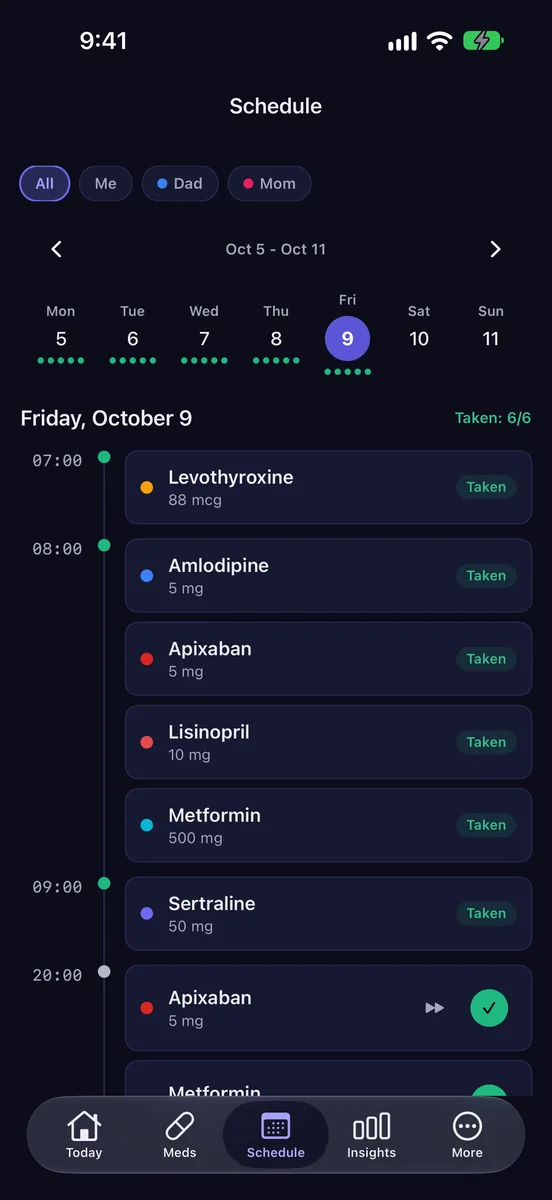
ChronoPill offers the official medication databases of 7 countries (including Japan) as offline packs: 500,000+ records, downloaded once, then usable without a connection. When you set a destination, Travel Mode:
- Flags medications in your list whose active substance is internationally controlled, and names the substance
- Lists the products with the same active substance (INN) in the destination's official registry, with their local names, for information only
- Generates a pharmacist card you can hand over at any counter abroad
- After a time-zone change, asks whether to keep your usual clock times or the same moments as at home
Travel alerts are informative only: they tell you which substance to verify and with whom (your pharmacist, the destination's consulate). They never tell you to skip a dose or leave a medication behind. Travel Mode is part of ChronoPill Premium.
Frequently asked questions
Can I bring codeine into Japan?
Codeine is internationally controlled under the 1961 Single Convention (INCB Yellow List). In Japan it is a narcotic: carrying it in needs an advance permission from the Narcotics Control Department of MHLW, requested at least 14 days before travel.
Whether your specific formulation and quantity require the permit is defined by the Japanese authorities: confirm with the Ministry of Health, Labour and Welfare or the nearest Japanese consulate, and ask your pharmacist to identify which of your medications contain codeine.
What is a Yunyu Kakunin-sho?
It is Japan's import confirmation for bringing more than a set supply of ordinary medicines (one month for prescription medicines), handled by the Ministry of Health, Labour and Welfare. Narcotics such as codeine need a separate permission from its Narcotics Control Department, and psychotropics such as alprazolam or diazepam need a doctor's certificate only above the quantity in MHLW's table.
The current thresholds, forms, and processing times are set by the Japanese authorities: verify them in Japan's INCB filing and directly with MHLW or a Japanese consulate before you book.
Are ADHD medications restricted in Japan?
ChronoPill's travel reference notes amphetamine-class stimulants as strictly prohibited under Japan's Stimulants Control Act; MHLW lists lisdexamfetamine separately, with an advance permission. Methylphenidate is a psychotropic: up to the quantity in MHLW's table, no permission is needed; above it, a doctor's certificate is required. Both substance families are also internationally scheduled (INCB Green List).
If your treatment involves either, discuss your trip with your prescriber and contact the nearest Japanese consulate well before travel: they can state what is currently possible and under which procedure.
Is my cold medicine a problem in Japan?
It can be worth checking. Pseudoephedrine, a 1988 Convention precursor (INCB Red List), appears in many over-the-counter cold remedies, and MHLW lists it as a stimulant raw material: bringing it into Japan needs an advance permission from the Narcotics Control Department.
Ask your pharmacist to check the active ingredients of any cold or allergy product you plan to pack, and confirm with a Japanese consulate if one of them is flagged.
Sources
Every factual claim on this page traces to one of the sources below. INCB list membership was extracted from the editions named here on 31 May 2026.
- INCB filing for Japan (2014): official PDF
- Japan medication data in ChronoPill: 16,848 records from the official PMDA / MHLW sources.
- INCB, Yellow List, 64th edition (substances under the 1961 Single Convention on Narcotic Drugs): official PDF · INCB Yellow List page
- INCB, Green List, 2026 edition (substances under the 1971 Convention on Psychotropic Substances): official PDF · INCB Green List page
- INCB, Red List (precursors under the 1988 Convention, Tables I and II): official PDF · INCB Red List page
- INCB, Regulations by country for travellers carrying controlled medicines: country index (99 filings)
- ChronoPill in-app travel reference, last reviewed August 2026. Informational compilation, not an official source; where it is cited on this page, it is named explicitly.
ChronoPill is not a medical device and this page is not legal or medical advice. It is an informational summary of publicly available regulatory sources. Rules change, and the only authoritative answers come from the destination country's authorities. Before traveling, confirm every point that matters to you with your pharmacist and with the destination country's consulate or embassy.