 ChronoPill
Traveling to Thailand with medication
Thailand regulates medicines by schedule under its Narcotics Code. Opioids such as morphine or codeine need a permit from the Thai Food and Drug Administration (Thai FDA) before you fly, sedatives and stimulants follow a quantity rule, and a few substances cannot be brought in at all.
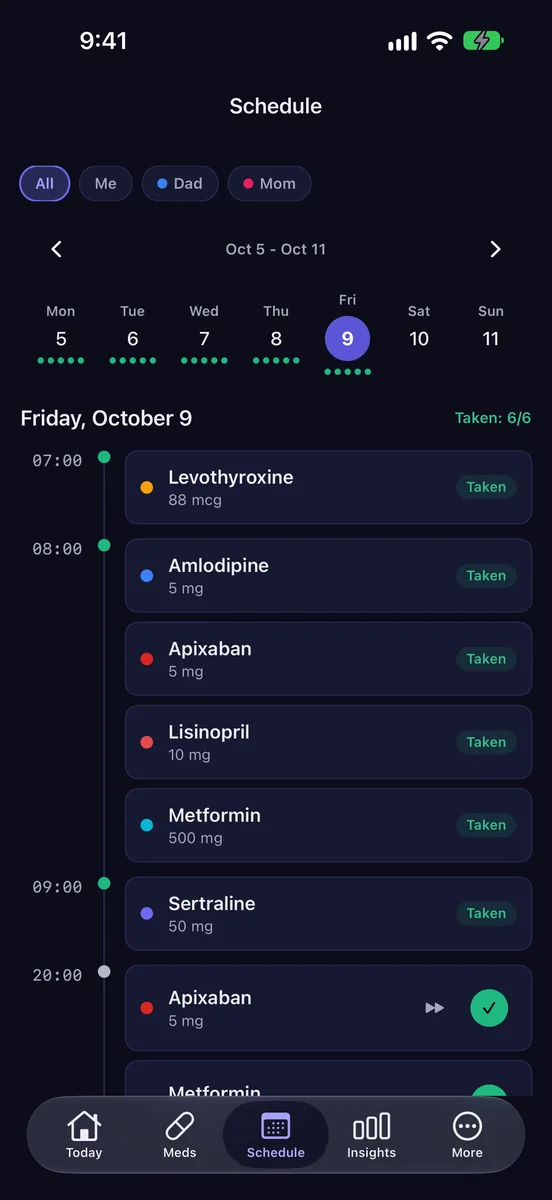
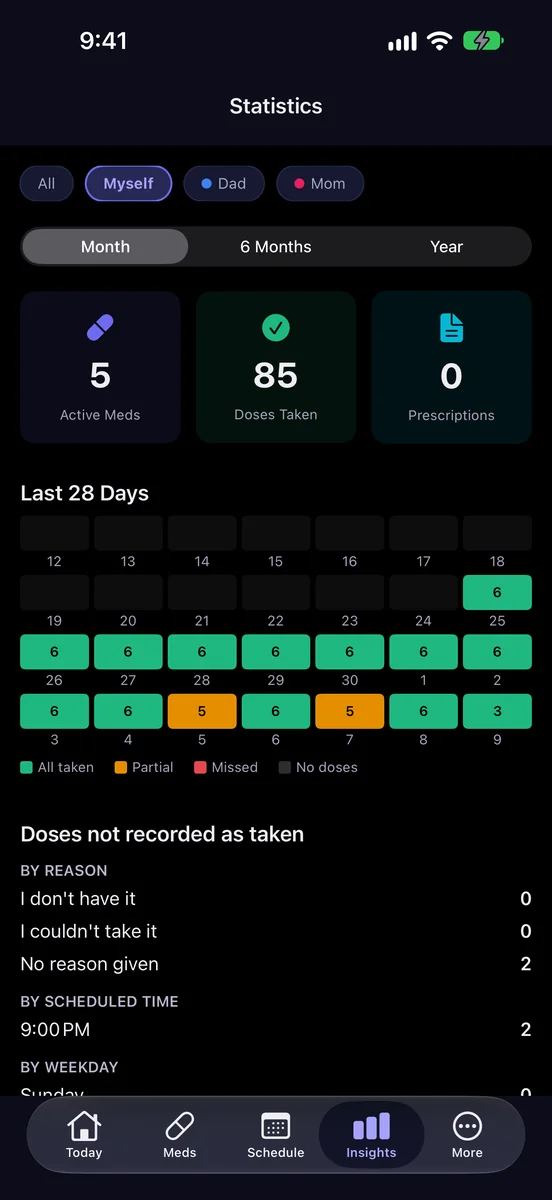
Traveling with medication? ChronoPill flags the internationally controlled substances in your list and, after a time-zone change, asks whether to keep your usual dose times. Travel Mode is part of ChronoPill Premium.
Download ChronoPillRead the filing (PDF)
Thailand's own declared rules for travellers carrying controlled medicines, including carry limits and required documents, live in its official INCB filing (September 2024): read the filing (PDF). This page summarizes context around it; the filing and the national authorities it names are authoritative.
Substances worth checking before you pack
The table combines the INCB international lists with the Thai FDA's tables of controlled narcotic drugs (15 September 2025) and psychotropic substances (18 September 2026) and its traveller guidance of 21 September 2024: a starting point for a conversation with your pharmacist, not a ruling.
| Active substance | International status (INCB) | Under Thai rules |
|---|---|---|
| Morphine, codeine, oxycodone, fentanyl, methadone | 1961 narcotic (Yellow List) | Narcotic drugs, Category II, all Schedule II examples in the Thai FDA guidance: FDA permit (Form IC-2) requested at least 15 days before arrival, prescription, at most a 90-day supply, declaration at the Customs red channel. |
| Amfetamine, dexamfetamine, lisdexamfetamine | Amfetamine, dexamfetamine: 1971 psychotropic (Green List); lisdexamfetamine not listed | Narcotic drugs. Amfetamine and dexamfetamine are Category I: the guidance lists them among substances travellers are forbidden to bring in, with no medical use in Thailand; the INCB filing repeats this. Lisdexamfetamine sits in Category II of the narcotics table (15 September 2025), the permit category. |
| Methylphenidate, alprazolam, buprenorphine, zolpidem | 1971 psychotropic (Green List) | Psychotropic substances, Category II: prescription from the prescribing physician up to a 30-day supply; FDA permit, requested at least 15 days ahead, for 31 to 90 days. |
| Diazepam, lorazepam, clonazepam | 1971 psychotropic (Green List) | Psychotropic substances, Category IV: the guidance sets the same 30-day and 31 to 90-day rule for Schedules II, III and IV. |
| Pseudoephedrine, ketamine | Pseudoephedrine: 1988 precursor (Red List); ketamine not listed | Psychotropic substances, Category II in the Thai FDA table: the psychotropic quantity rule applies, cold remedies included. |
| Tramadol, pregabalin, gabapentin | Not on the INCB lists | Absent from the Thai FDA tables of controlled narcotic drugs and psychotropic substances. Royal Thai Embassy pages place non-controlled prescription medicines under the Drug Act B.E. 2510: at most 30 days of prescribed usage, original containers, prescription at hand. |
| Cannabis, THC and CBD products | Cannabis: 1961 narcotic (Yellow List) | Tetrahydrocannabinol (THC) is in Category I of the Thai FDA's psychotropics table and a prohibited Category 1 psychotropic in Thailand's INCB filing; extracts of cannabis sit in narcotics Category V under conditions set by a Ministry of Public Health notification. The Royal Thai Embassy in Brussels (14 March 2024) states that importing cannabis or hemp without a licence and customs clearance is penalised under the Customs Act. CBD products are not named in the lists consulted: ask the Narcotics Control Division. |
International status: INCB Yellow, Green and Red Lists (editions in Sources), extracted 31 May 2026; Thai categories read on 24 October 2026.
Advance procedures: the Thai FDA permit (Form IC-2)
Thailand has one advance procedure for travellers, run by the Thai FDA's Narcotics Control Division under the Narcotics Code and Ministerial Regulation B.E. 2567 (2024), in force since 21 September 2024. Narcotic drugs in Schedule II or III need a permit, Form IC-2, whatever the quantity, up to a 90-day supply as prescribed. Psychotropic substances in Schedule II, III or IV need the same permit only for a 31 to 90-day supply; up to 30 days, the guidance asks for a prescription from the prescribing physician. Thailand's INCB filing states the psychotropic threshold by length of stay (under 30 days) rather than by quantity: the two official texts differ.
The request is filed online on the FDA permit portal (request form IC-1) at least 15 days before arrival, with a passport copy and a signed physician's document (patient's name and address, diagnosis, each medication with strength, dosage and total amount, prescriber's licence number). The FDA states approximately 3 working days of processing, delivery by e-mail and no fee. On arrival, medications, permit and documents are presented at the Customs red channel; the entry permit also covers the remaining medication on the way out. Thai Customs lists medicine among restricted goods whose FDA permit is shown at customs.
Checklist for Thailand
- List the active substance (INN) of every medication you plan to carry, prescription and over-the-counter alike.
- Look each substance up in the Thai FDA's Check the Drug tool, and ask your pharmacist which ones Thailand controls.
- For a Schedule II or III narcotic drug, or a Schedule II to IV psychotropic substance beyond 30 days, apply for the FDA permit (Form IC-2) online at least 15 days before arrival, with the prescriber's document.
- Check cold remedies specifically: pseudoephedrine is a Category II psychotropic substance in Thailand.
- Keep original labelled containers, declare permit medications at the Customs red channel, and keep the papers with you.
- For any doubt, the Royal Thai Embassy in your country or the FDA's Narcotics Control Division is the authoritative contact before departure.
How ChronoPill's Travel Mode helps
ChronoPill offers the official medication databases of 7 countries as offline packs: 500,000+ records, downloaded once, then usable without a connection. When you set a destination, Travel Mode:
- Flags medications in your list whose active substance is internationally controlled, and names the substance
- Lists the products with the same active substance (INN) in the destination's official registry, with their local names, for information only
- Generates a pharmacist card you can hand over at any counter abroad
- After a time-zone change, asks whether to keep your usual clock times or the same moments as at home
Travel alerts are informative only: they tell you which substance to verify and with whom (your pharmacist, the destination's consulate). They never tell you to skip a dose or leave a medication behind. Travel Mode is part of ChronoPill Premium.
Frequently asked questions
Can I bring codeine into Thailand?
Codeine is a 1961 Single Convention narcotic (INCB Yellow List) and a Category II narcotic drug in Thailand: permit (Form IC-2) requested online at least 15 days before arrival, a prescription, at most a 90-day supply, declaration at the Customs red channel.
Whether your product and quantity fall under this rule is for the Thai authorities to say: ask the Narcotics Control Division or the nearest Royal Thai Embassy.
What is Form IC-2?
It is the permit the Thai FDA issues to a traveller under treatment bringing into Thailand narcotic drugs in Schedule II or III, or psychotropic substances in Schedule II, III or IV for 31 to 90 days of use. The request goes through the FDA permit portal at least 15 days before arrival; the FDA states approximately 3 working days of processing and e-mail delivery.
The Thai authorities set the conditions: verify them on the portal before you book.
Are ADHD medications restricted in Thailand?
The Thai FDA guidance lists amphetamine and dextroamphetamine among substances travellers are forbidden to bring in, with no medical use in Thailand (narcotics Category I). Methylphenidate is a Category II psychotropic substance: prescription for up to 30 days, FDA permit for 31 to 90 days. Lisdexamfetamine appears in Category II of the FDA's narcotics table, the permit category.
If your treatment involves any of these, ask your prescriber and the Narcotics Control Division or the nearest Royal Thai Embassy well before travel.
Do sleeping pills or anxiety medication need a permit in Thailand?
Alprazolam and zolpidem are Category II psychotropic substances in the Thai FDA table; diazepam, lorazepam and clonazepam are Category IV. For all of them: prescription up to a 30-day supply, FDA permit (Form IC-2), requested at least 15 days ahead, for 31 to 90 days.
Ask your pharmacist which of your medications contain these substances, and confirm your quantities with the FDA's Check the Drug tool.
Sources
Every factual claim on this page traces to a source below; INCB list membership was extracted on 31 May 2026.
- INCB, consulted 2026-10-24: filing for Thailand (September 2024) · regulations by country for travellers
- Thai FDA, consulted 2026-10-24: Guidance for Travelers under Treatment Carrying Personal Medications into Thailand (Version 5, 21 September 2024) · Restrictions on Narcotics · Restrictions on Psychotropic Substances (Version 4, 21 September 2024) · tables of controlled narcotic drugs (15 September 2025) · psychotropic substances (18 September 2026) · How to submit an online application (Version 3, 2 September 2026) · permit portal (Check the Drug tool) · English site, traveller guidance page
- Ministry of Foreign Affairs of Thailand and Thai Customs Department, consulted 2026-10-24: one-page Thai FDA guidance (21 September 2024) · Guidelines for Airport Passengers (27 February 2025)
- Royal Thai Embassies and consulates, consulted 2026-10-24: London (27 March 2024) · Chicago (19 December 2024) · The Hague (24 April 2024) · Brussels, bringing cannabis to Thailand (14 March 2024)
- INCB lists: Yellow List, 64th edition (1961 Single Convention) · Green List, 2026 edition (1971 Convention) · Red List (1988 Convention precursors)
ChronoPill is not a medical device and this page is not legal or medical advice. It is an informational summary of publicly available regulatory sources. Rules change, and the only authoritative answers come from the destination country's authorities. Before traveling, confirm every point that matters to you with your pharmacist and with the destination country's consulate or embassy.