 ChronoPill
Traveling to Morocco with medication
Morocco's customs admit medicines for personal use free of duty on sight of medical documents and a signed undertaking, list narcotics among prohibited imports, and leave narcotic and psychotropic medicines to the health authority. Morocco's declared rules for travellers are filed with the INCB (10 August 2026). Here is what the official sources say, and who to ask.
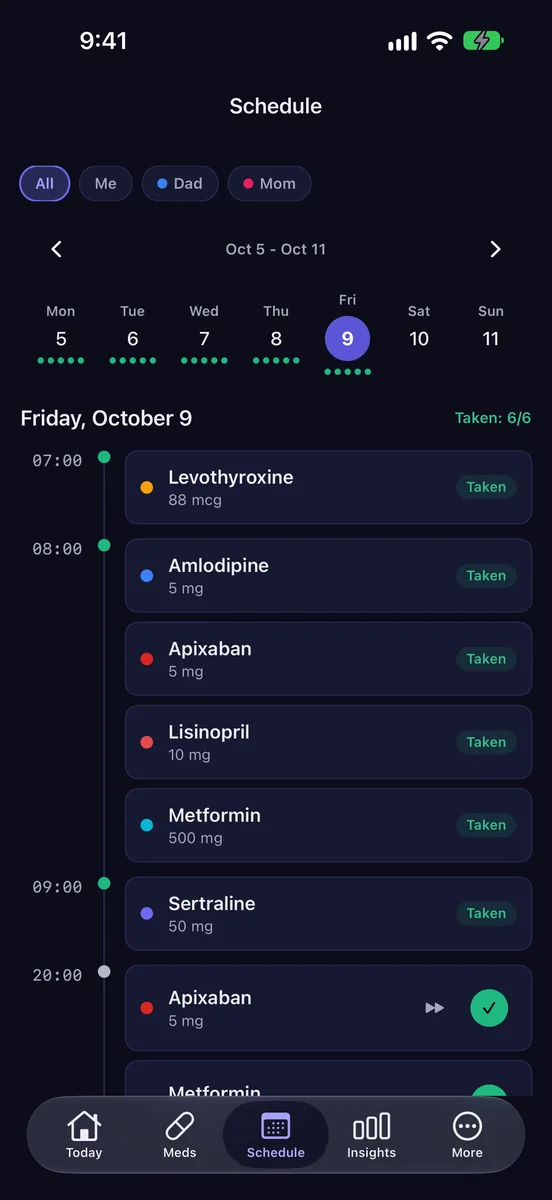
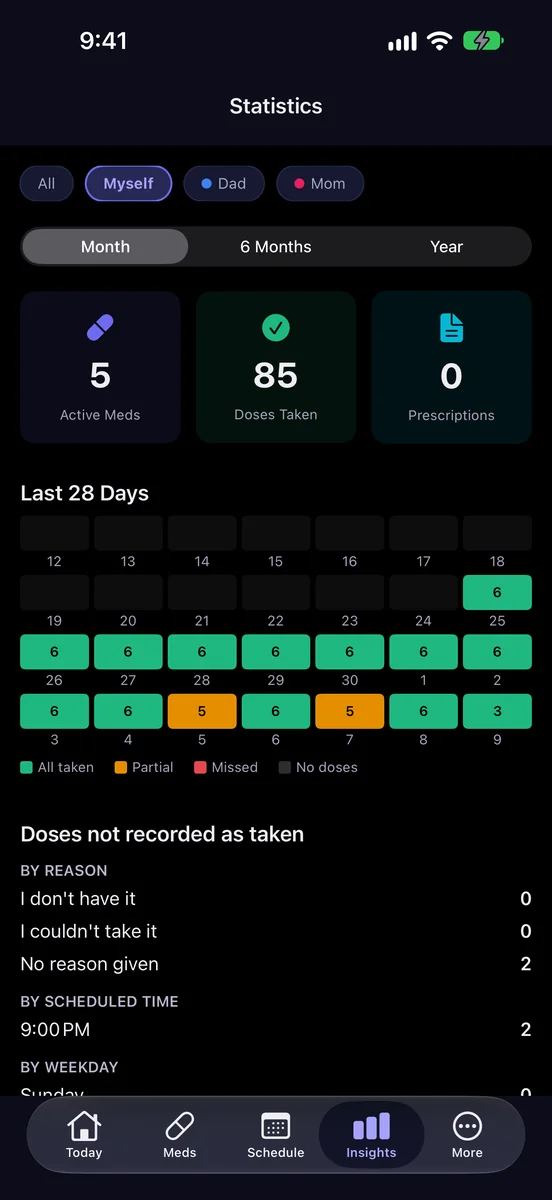
Traveling with medication? ChronoPill flags the internationally controlled substances in your list and, after a time-zone change, asks whether to keep your usual dose times. Travel Mode is part of ChronoPill Premium.
Download ChronoPillRead the filing (PDF)
Morocco's own declared rules for travellers carrying controlled medicines, including the required documents, live in the country's official INCB filing (10 August 2026): read the filing (PDF). This page summarizes context around it; the filing and the national authorities it names are authoritative.
Substances worth checking before you pack
Morocco publishes no traveller list of named substances in the sources consulted: its INCB filing speaks of narcotic drugs and psychotropic substances as categories, its customs texts distinguish personal medicines from prohibited narcotics, and its medicines code sends narcotic and psychotropic medicines to the legislation in force and the international conventions. The table therefore pairs the INCB status of common substances with what the Moroccan texts say for their category: a starting point for your pharmacist, not a ruling.
| Active substance | International status (INCB) | Under Moroccan rules |
|---|---|---|
| Morphine, oxycodone, fentanyl, methadone, hydrocodone | 1961 narcotic (Yellow List) | Narcotic drugs. Morocco's INCB filing lists a valid prescription, a doctor's certificate endorsed by the health authorities of your country of residence, a certificate issued by the Moroccan health authorities, the patient's written request and, where applicable, a transport certificate or authorization; it declares no number of days or doses. The AMMPS Controlled Substances Unit is the contact. Customs guides list narcotics among prohibited imports. |
| Codeine, dihydrocodeine, pholcodine | 1961 narcotic (Yellow List) | Same convention category, common in cough and cold products. The Moroccan sources consulted do not say how codeine combinations are treated: ask the AMMPS unit or a Moroccan pharmacist. |
| Diazepam, alprazolam, lorazepam, clonazepam, zolpidem, phenobarbital | 1971 psychotropic (Green List) | Psychotropic substances: the INCB filing lists the same documents as for narcotic drugs. The Ministry of Health's 2018 methadone guide describes the transport certificate the narcotics service issues to a patient travelling with a medicine classed as a narcotic or psychotropic. |
| Methylphenidate, amfetamine, dexamfetamine, lisdexamfetamine | Methylphenidate, amfetamine, dexamfetamine: 1971 psychotropic (Green List); lisdexamfetamine not listed | Psychotropic substances under the conventions: same documents as above. Lisdexamfetamine is not named in the Moroccan sources consulted. |
| Buprenorphine | 1971 psychotropic (Green List) | Psychotropic substance under the 1971 Convention: same documents as above. |
| Tramadol, pregabalin, gabapentin | Not on the INCB lists | Not named in the Moroccan sources consulted, which do not publish the national list of psychotropic substances online. For a prescription medicine outside the narcotic and psychotropic categories, the customs rule applies: medical documents and the sworn undertaking. Ask the AMMPS unit or a Moroccan pharmacist which category applies. |
| Pseudoephedrine, ephedrine | 1988 precursor (Red List) | Not named in the Moroccan traveller texts consulted. For cold remedies the only stated rule is the customs one for personal medicines: medical documents and the undertaking. |
| Cannabis, THC and CBD products | Cannabis: 1961 narcotic (Yellow List) | Narcotics are prohibited imports under the customs guides, and the 1974 narcotics law punishes the illicit import, transport or possession of substances classed as narcotics with five to ten years' imprisonment; the French foreign ministry describes systematic border controls. Law 13-21 of 2021 authorizes licensed cultivation and processing of cannabis for medical, pharmaceutical and industrial uses and says nothing about travellers. CBD products are not named in the sources consulted: ask the Moroccan embassy or consulate. |
International status: INCB Yellow, Green and Red Lists (editions in Sources), extracted 31 May 2026; Moroccan texts read on 31 October 2026.
Advance procedures: the customs undertaking and the AMMPS transport certificate
For medicines carried for personal use, the Moroccan customs (Administration des Douanes et Impôts Indirects) describe one formality in their 2026 guide for visitors: duty-free admission without prior authorization from the Ministry of Health, provided the traveller presents the medical documents (medical certificate, prescription) and signs an undertaking, available at customs offices, to use the medicines personally only and to re-export what is not consumed at the end of the stay. The undertaking form (annex V.26, « engagement sur l'honneur ») lists each medicine and its quantity, the dates of the stay and the passport details. The customs circular of 28 May 2025 for Moroccans living abroad repeats the rule and adds that importing medicines for any use other than personal requires an authorization from the health department and payment of duties and taxes. None of these texts states a quantity or a number of days; the 2010 leaflet speaks of small quantities for personal needs.
Narcotic and psychotropic medicines follow another path. Customs guides list narcotics among strictly prohibited imports, and Morocco's medicines code (law 17-04, article 23) states that medicines classed as narcotics or psychotropics enter the national territory under the legislation in force and the international conventions. Morocco's INCB filing of 10 August 2026 names the documents a traveller under such treatment needs (valid prescription, doctor's certificate endorsed by the health authorities of the country of residence, certificate issued by the Moroccan health authorities, written request, release authorization for a medicine not sold in Morocco, transport certificate where applicable) and the contact: the Controlled Substances Unit of the Moroccan Agency for Medicines and Health Products (AMMPS), Rue Lamfadal Charkaoui, Rabat, stupefiant@ammps.gov.ma. The Ministry of Health's 2018 methadone guide shows the certificate the narcotics service issues to a patient travelling with a narcotic or psychotropic medicine, drawn up on the INCB model. The sources give no processing time, fee or quantity limit: write to the unit well before departure. The Moroccan embassy or consulate in your country can state which procedure applies to you.
Checklist for Morocco
- List the active substance (INN) of every medication you plan to carry, prescription and over-the-counter alike.
- Ask your pharmacist which of them are narcotic drugs or psychotropic substances under the UN conventions, codeine combinations and benzodiazepines included.
- Read Morocco's official INCB filing (linked above) for the declared documents; it states no number of days or doses.
- For a narcotic or psychotropic medicine, write to the AMMPS Controlled Substances Unit (stupefiant@ammps.gov.ma) well before departure about the certificates the filing lists.
- Keep original packaging and a prescription that names each medicine by its INN, as the French foreign ministry advises; the US State Department notes that medicines mailed to Morocco are impounded by customs.
- On arrival, be ready to show the medical documents and to sign the customs undertaking; take the red channel if you have goods to declare.
- For any doubt, the Moroccan embassy or consulate in your country is the authoritative contact before departure.
How ChronoPill's Travel Mode helps
ChronoPill offers the official medication databases of 7 countries as offline packs: 500,000+ records, downloaded once, then usable without a connection. When you set a destination, Travel Mode:
- Flags medications in your list whose active substance is internationally controlled, and names the substance
- Lists the products with the same active substance (INN) in the destination's official registry, with their local names, for information only
- Generates a pharmacist card you can hand over at any counter abroad
- After a time-zone change, asks whether to keep your usual clock times or the same moments as at home
Travel alerts are informative only: they tell you which substance to verify and with whom (your pharmacist, the destination's consulate). They never tell you to skip a dose or leave a medication behind. Travel Mode is part of ChronoPill Premium.
Frequently asked questions
Is codeine controlled in Morocco?
Codeine is a 1961 Single Convention narcotic (INCB Yellow List). Morocco's INCB filing covers narcotic drugs as a category and lists the documents a traveller needs: valid prescription, doctor's certificate endorsed by the health authorities of the country of residence, certificate from the Moroccan health authorities, written request and, where applicable, a transport certificate.
Whether a given codeine product, cough syrups included, falls under these rules is for the Moroccan authorities to say: ask the AMMPS Controlled Substances Unit or the Moroccan embassy or consulate, and your pharmacist for the composition.
What is the customs undertaking for personal medicines?
It is the form (« engagement sur l'honneur », annex V.26) available at Moroccan customs offices: the traveller lists the medicines and quantities carried, the dates of the stay and passport details, declares that they are for personal use only and undertakes to re-export the unused quantity. With the medical documents (prescription, medical certificate), the 2026 customs guide admits personal medicines free of duty and without prior authorization from the Ministry of Health.
No quantity or number of days is stated in the customs texts; medicines imported for any other purpose need an authorization from the health department. For narcotic and psychotropic medicines, see the INCB filing and the AMMPS unit.
Are ADHD medications and benzodiazepines restricted in Morocco?
Methylphenidate, amfetamine and dexamfetamine, like diazepam, alprazolam, lorazepam, clonazepam and zolpidem, are psychotropic substances under the 1971 Convention (INCB Green List). Morocco's INCB filing lists the same documents for psychotropic substances as for narcotic drugs and names the AMMPS Controlled Substances Unit as the contact; the Ministry of Health's 2018 guide describes the transport certificate issued to travelling patients.
Lisdexamfetamine is not on the INCB lists and is not named in the Moroccan sources consulted. Discuss your trip with your prescriber and write to the AMMPS unit well before travel.
What do Moroccan sources say about cannabis and CBD products?
Customs guides list narcotics (« stupéfiants ») among strictly prohibited imports, and the 1974 narcotics law punishes the illicit import, transport or possession of substances classed as narcotics with five to ten years' imprisonment; the French foreign ministry describes systematic and rigorous border controls and prison sentences for possession even in small quantities.
Law 13-21 of 2021 authorizes licensed cultivation and processing of cannabis for medical, pharmaceutical and industrial purposes and says nothing about travellers. Cannabidiol (CBD) is not named in the sources consulted. Before packing any cannabis-derived product, ask the Moroccan embassy or consulate.
Sources
Sources of every claim on this page, each consulted on 2026-10-31; INCB list membership extracted on 31 May 2026.
- INCB filing, Morocco, 10 August 2026: official PDF (English) · French original · previous filing of 29 May 2024. Consulted 2026-10-31.
- INCB, regulations by country for travellers: country index. Consulted 2026-10-31.
- Administration des Douanes et Impôts Indirects (Moroccan customs): guide for visitors, À votre arrivée au Maroc, 2026 edition (PDF) · circular 6659/311 of 28 May 2025, Opération Marhaba, annex I.3 (PDF) · undertaking form, annex V.26 (PDF) · leaflet Information for travellers visiting Morocco, 2010 (PDF). Consulted 2026-10-31.
- Ministry of Health of Morocco: law 17-04, medicines and pharmacy code, article 23 (PDF) · dahir 1-73-282 of 21 May 1974 on narcotics, Bulletin officiel 3214 (PDF) · texts applicable to health products · national reference guide on methadone, 2018, section VII and annexes 5 and 6 (PDF). Consulted 2026-10-31.
- Moroccan Agency for Medicines and Health Products (AMMPS): forms for medicines, narcotics and psychotropics. Consulted 2026-10-31.
- Ministry of Justice of Morocco (Adala portal): law 13-21 on licit uses of cannabis, 2021 (PDF). Consulted 2026-10-31.
- France, Ministère de l'Europe et des Affaires étrangères, Conseils aux voyageurs Maroc, updated 15 September 2026: Santé · Informations utiles. Consulted 2026-10-31.
- United Kingdom, FCDO travel advice Morocco, updated 19 August 2026: Health · Entry requirements. Consulted 2026-10-31.
- United States, Department of State, Morocco International Travel Information, page dated 4 June 2025: travel.state.gov; archived copy of 9 July 2026 read, the live page refuses automated reading. Consulted 2026-10-31.
- Morocco medication data in ChronoPill: 9,908 records from the official AMMPS source.
- INCB Yellow List, 64th edition: official PDF · list page
- INCB Green List, 2026 edition: official PDF · list page
- INCB Red List (precursors): official PDF · list page
ChronoPill is not a medical device and this page is not legal or medical advice. It is an informational summary of publicly available regulatory sources. Rules change, and the only authoritative answers come from the destination country's authorities. Before traveling, confirm every point that matters to you with your pharmacist and with the destination country's consulate or embassy.