 ChronoPill
Traveling to Saudi Arabia with medication
Saudi Arabia places medicines containing narcotic drugs or psychotropic substances under the Saudi Food and Drug Authority (SFDA): travellers must disclose them and are asked to obtain a clearance permit in the Controlled Drugs System before arrival, for at most 30 days or the length of stay, whichever is shorter. Customs list unregistered pills and drugs of all kinds among prohibited items. Here is what the official sources say, and who to ask.
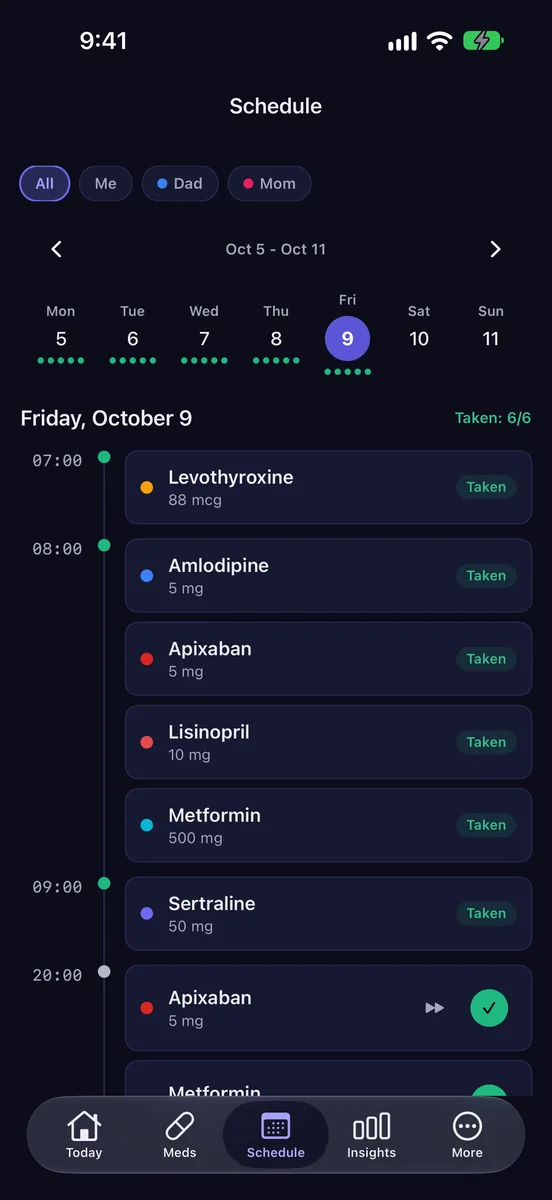
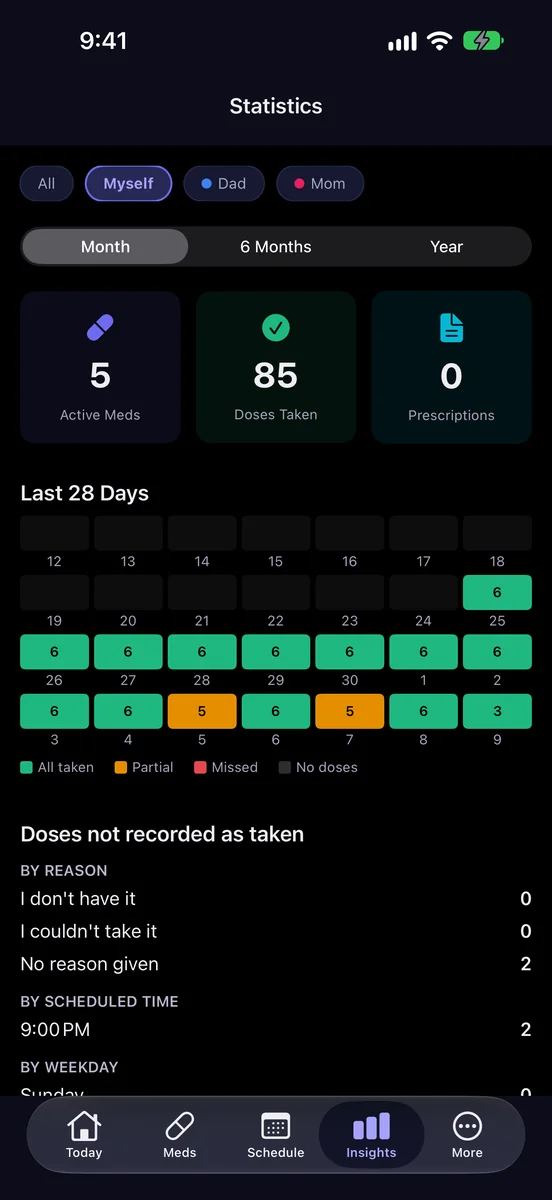
Traveling with medication? ChronoPill flags the internationally controlled substances in your list and, after a time-zone change, asks whether to keep your usual dose times. Travel Mode is part of ChronoPill Premium.
Download ChronoPillRead the filing (PDF)
Saudi Arabia's own declared rules for travellers carrying controlled medicines, including carry limits and required documents, live in the country's official INCB filing (1 January 2025): read the filing (PDF). This page summarizes context around it; the filing and the national authorities it names are authoritative.
Substances worth checking before you pack
Source: the schedules annexed to Saudi Arabia's Law of Combating Narcotic Drugs and Psychotropic Substances, in the consolidated version published in the official gazette Umm Al-Qura on 22 November 2024 and posted on the SFDA's Controlled Drugs System site. Schedule 1 holds narcotic drugs and Schedule 2 psychotropic substances, each in categories (A) to (D) mirroring the four schedules of the 1961 and 1971 Conventions, plus a category (E) of substances controlled locally. For every listed medicine the SFDA procedure is the same: a clearance permit requested in the Controlled Drugs System, for at most 30 days or the length of stay. A starting point for your pharmacist, not a ruling.
| Active substance | Status in the Saudi schedules | What the official guidance asks for |
|---|---|---|
| Morphine, oxycodone, fentanyl, methadone, hydrocodone | Narcotic drug, Schedule 1 category (A) | SFDA clearance permit before travel; 30 days or length of stay, whichever is shorter; prescription or medical report under six months old. INCB Yellow List. |
| Codeine, dihydrocodeine, pholcodine | Narcotic drug, Schedule 1 category (B); preparations up to 100 mg per dosage unit and 2.5 percent: category (C) | Same permit. The schedules' general provisions treat tablets or capsules with 8 mg of codeine or less as ordinary prescription medicines outside the narcotics law. Common in cough and cold products. INCB Yellow List. |
| Tramadol | Narcotic drug controlled locally, Schedule 1 category (E) | Same permit. Not on the INCB lists. |
| Pregabalin, gabapentin | Psychotropic substance controlled locally, Schedule 2 category (E) | Same permit. Not on the INCB lists. |
| Methylphenidate, amfetamine, dexamfetamine | Psychotropic substance, Schedule 2 category (B) | Same permit. INCB Green List. |
| Lisdexamfetamine, modafinil, ketamine | Psychotropic substance controlled locally, Schedule 2 category (E) | Same permit. Not on the INCB lists. |
| Diazepam, alprazolam, lorazepam, clonazepam, zolpidem, bromazepam, midazolam, phenobarbital | Psychotropic substance, Schedule 2 category (D) | Same permit. INCB Green List. |
| Buprenorphine | Psychotropic substance, Schedule 2 category (C) | Same permit. INCB Green List. |
| Pseudoephedrine, ephedrine | Chemical precursors, Schedule 3 category (A); ephedrine also Schedule 2 category (E) | The general provisions place ephedrine in a pharmaceutical form under the pharmaceutical establishments law rather than the narcotics law; pseudoephedrine medicines are not addressed by the traveller texts consulted. Customs list pills not registered with the SFDA among prohibited items. INCB Red List. |
| Cannabis, THC and CBD products | Cannabis, its resin and extracts: Schedule 1 category (A); tetrahydrocannabinol: Schedule 2 category (A); dronabinol: Schedule 2 category (B) | The SFDA procedures exclude Schedule 2 category (A) from traveller clearance, and the cannabis plant is in Schedule 4 of prohibited plants. Cannabidiol is not named. The US State Department reports severe penalties for illegal drugs. Ask the Saudi embassy before packing any cannabis-derived product. |
| Heroin and the other Schedule 1 category (D) narcotics; fenetylline, methaqualone, secobarbital | Schedule 1 category (D); paragraph Fourth of the general provisions | Import, trade, possession and use prohibited, research only; excluded from traveller clearance together with Schedule 2 category (A). |
Categories: general provisions and schedules annexed to the Law of Combating Narcotic Drugs and Psychotropic Substances, approved by the joint Ministry of Health and SFDA committee (administrative decision 13362/Q of 28/05/1444 AH), Umm Al-Qura issue 5057 of 22 November 2024, read on 31 October 2026. International status: INCB Yellow, Green and Red Lists, extracted 31 May 2026.
Advance procedures: the SFDA Traveler's Permit for Controlled Drugs
Saudi Arabia's advance procedure is the Traveler's Permit for Controlled Drugs, launched by the SFDA on 12 February 2025 and described in its guideline of 14 August 2025. The traveller, or a relative or representative, creates a Personal Traveler Account in the Electronic Controlled Drugs System (CDS), enters the trip (arrival or departure, dates, country) and each medicine (trade name, active substance, concentration, dosage form, number of packages), uploads a prescription or medical report, proof of identity and a photo of the medicine and its packaging, then signs an electronic pledge. The SFDA procedures ask for a medical report approved by the treating institution, or a prescription in the patient's name stamped by it, less than six months old, stating the diagnosis, the scientific name, dosage form and dose, the duration of treatment and how to use it. The approved quantity is at most 30 days of use or the duration of the stay, whichever is shorter; the SFDA may make an exception when the medicine or an alternative is not sold locally; departing patients may carry up to 90 days, subject to the laws of the countries visited; any excess is destroyed; injections are cleared under a local treating institution; a permit for another patient needs that patient's consent and ID. The SFDA states no fee and no processing time; the US State Department writes that approval may take several weeks.
Official sources do not all say the same thing. Saudi Arabia's INCB filing advises travellers to apply for pre-approval clearance before arrival and states that medicines containing narcotic drugs or psychotropic substances in a traveller's possession must be disclosed; the UK Foreign Office says approval from the Saudi authorities may be needed for some prescription drugs, asks for a prescription or letter giving the amount, the drug and dosage, the doctor's signature and the clinic's stamp, and notes that UK prescriptions are not accepted in Saudi Arabia, where only doctors licensed by the Saudi Commission for Health Specialties may prescribe. For other medicines, the SFDA's personal-use document allows prescription medicines for up to 3 months of use per the prescription and locally controlled medicines for 3 months or the stay, while its pilgrims' requirements of 2026 allow one month or the stay for non-controlled medicines, with a report or prescription under six months old, in original packaging and not expired; the SFDA refuses products with misleading claims, blood derivatives and vaccines, and anything banned internationally or locally. Customs (ZATCA) ask travellers to declare restricted items that need an approval, medicines among them, and list pills and drugs of all kinds, and pills not registered with the SFDA, among prohibited items. The Saudi embassy or consulate in your country can state which procedure applies to you.
Checklist for Saudi Arabia
- List the active substance (INN) of every medication you plan to carry, prescription and over-the-counter alike.
- Ask your pharmacist which of them appear in the Saudi schedules: opioids, benzodiazepines and stimulants, and also tramadol, pregabalin and gabapentin, which Saudi Arabia controls locally.
- Read Saudi Arabia's official INCB filing (linked above) for the declared documents and the 30-day limit.
- For a scheduled medicine, apply for the clearance permit in the SFDA's Controlled Drugs System before departure, with a prescription or medical report under six months old, your ID and a photo of the medicine and its packaging; keep the permit to show at the port of entry.
- Keep original packaging and quantities within 30 days or the length of your stay; carry the prescription or report with the diagnosis, the scientific name, the dose and the duration of treatment.
- Declare restricted items such as medicines to customs, and never carry anything for someone else.
- For any doubt, the Saudi embassy or consulate in your country is the authoritative contact before departure.
How ChronoPill's Travel Mode helps
ChronoPill offers the official medication databases of 7 countries as offline packs: 500,000+ records, downloaded once, then usable without a connection. When you set a destination, Travel Mode:
- Flags medications in your list whose active substance is internationally controlled, and names the substance
- Lists the products with the same active substance (INN) in the destination's official registry, with their local names, for information only
- Generates a pharmacist card you can hand over at any counter abroad
- After a time-zone change, asks whether to keep your usual clock times or the same moments as at home
Travel alerts are informative only: they tell you which substance to verify and with whom (your pharmacist, the destination's consulate). They never tell you to skip a dose or leave a medication behind. Travel Mode is part of ChronoPill Premium.
Frequently asked questions
Is codeine controlled in Saudi Arabia?
Yes: codeine is a narcotic drug in Schedule 1 category (B) of the Saudi schedules, and its preparations with at most 100 mg per dosage unit form category (C); only tablets or capsules with 8 mg of codeine or less are treated as ordinary prescription medicines by the schedules' general provisions. Codeine is also on the INCB Yellow List.
Ask your pharmacist which of your medications, including cough and cold products, contain codeine and at what dose, and apply for the SFDA clearance permit when the product is scheduled.
What is the Traveler's Permit for Controlled Drugs?
It is the SFDA clearance permit for medicines containing narcotic drugs or psychotropic substances carried by travellers arriving in or departing from Saudi Arabia, requested online in the Electronic Controlled Drugs System (cds.sfda.gov.sa) with a Personal Traveler Account: trip details, each medicine, a prescription or medical report under six months old, proof of identity and a photo of the medicine, then an electronic pledge.
The approved quantity is at most 30 days of use or the length of stay, whichever is shorter. The SFDA states no fee or processing time; the US State Department says approval may take several weeks. The permit is shown at the port of entry.
Are ADHD medications restricted in Saudi Arabia?
Methylphenidate, amfetamine and dexamfetamine are psychotropic substances in Schedule 2 category (B) of the Saudi schedules, and lisdexamfetamine is in category (E), controlled locally: all of them call for the SFDA clearance permit. The first three are also on the INCB Green List.
Discuss your trip with your prescriber, apply in the Controlled Drugs System well before travel and contact the Saudi embassy or consulate.
Does Saudi Arabia control tramadol, pregabalin or gabapentin?
Yes. Tramadol is a narcotic drug controlled locally (Schedule 1 category (E)), and pregabalin and gabapentin are psychotropic substances controlled locally (Schedule 2 category (E)), although none of them is on the INCB lists. They follow the same permit procedure as the internationally scheduled medicines.
Ask your pharmacist whether any of your medications contain these substances, and apply for the SFDA clearance permit before departure.
Sources
Sources of every claim on this page, each consulted on 2026-10-31; INCB list membership extracted on 31 May 2026.
- INCB filing, Kingdom of Saudi Arabia, 1 January 2025: official PDF · previous filing of 12 March 2024 · country index. Consulted 2026-10-31.
- SFDA, Traveler's Permit for Controlled Drugs: launch at LEAP 2025 (12 February 2025) · guideline for the clearance permit of controlled drugs for travelers (14 August 2025) · regulations for pilgrims carrying controlled medications (5 May 2026) · Electronic Controlled Drugs System · User Manual for Traveler Clearance (PDF). Consulted 2026-10-31.
- SFDA, general provisions on the schedules annexed to the Law of Combating Narcotic Drugs and Psychotropic Substances, Umm Al-Qura issue 5057, 22 November 2024, Arabic and English: schedules (PDF). Consulted 2026-10-31.
- SFDA, Executive Regulations for Combating Narcotics and Psychotropic Substances, with the Procedures and Controls for Narcotic Drugs and Psychotropic Substances (article 6 of the procedures, patients arriving or departing for personal use): regulation page · PDF. Consulted 2026-10-31.
- SFDA, Conditions and requirements for obtaining permits for drugs, pharmaceuticals and cosmetics products for individuals for personal use, version 3.0 (Arabic): regulation page · PDF. Consulted 2026-10-31.
- SFDA, Regulations and Requirements for the clearance of medicines, pharmaceutical products, medical devices and supplies, and food products that arrive for pilgrims' use, revision 6 (11/10/1447 AH), section three: PDF. Consulted 2026-10-31.
- Zakat, Tax and Customs Authority (ZATCA): Guidelines for Travelers (updated 26 August 2026) · Restricted or Prohibited Goods (29 May 2025) · Regulations for Luggage (21 October 2026). Consulted 2026-10-31.
- United Kingdom, FCDO travel advice Saudi Arabia, updated 27 October 2026: Health · Entry requirements. Consulted 2026-10-31.
- France, Ministère de l'Europe et des Affaires étrangères, Conseils aux voyageurs Arabie saoudite, updated 13 October 2026: Santé · Informations utiles. Consulted 2026-10-31.
- United States, Department of State, Saudi Arabia International Travel Information, page dated 24 January 2024: travel.state.gov; archived copy of 12 May 2026 read, the live page refuses automated reading. Consulted 2026-10-31.
- INCB Yellow List, 64th edition: official PDF · list page
- INCB Green List, 2026 edition: official PDF · list page
- INCB Red List (precursors): official PDF · list page
ChronoPill is not a medical device and this page is not legal or medical advice. It is an informational summary of publicly available regulatory sources. Rules change, and the only authoritative answers come from the destination country's authorities. Before traveling, confirm every point that matters to you with your pharmacist and with the destination country's consulate or embassy.