 ChronoPill
Traveling to Turkey with medication
Turkey's customs count medicines used in personal treatment among a passenger's personal goods: they enter free of duty on sight of a medical report or prescription, in a reasonable quantity for the length of stay, and the country's INCB filing expects travellers under treatment with controlled medicines to carry only what their stay requires, with specific rules for methadone and for cannabis-based medicines. Turkey's declared rules for travellers are filed with the INCB (28 November 2017). Here is what the official sources say, and who to ask.
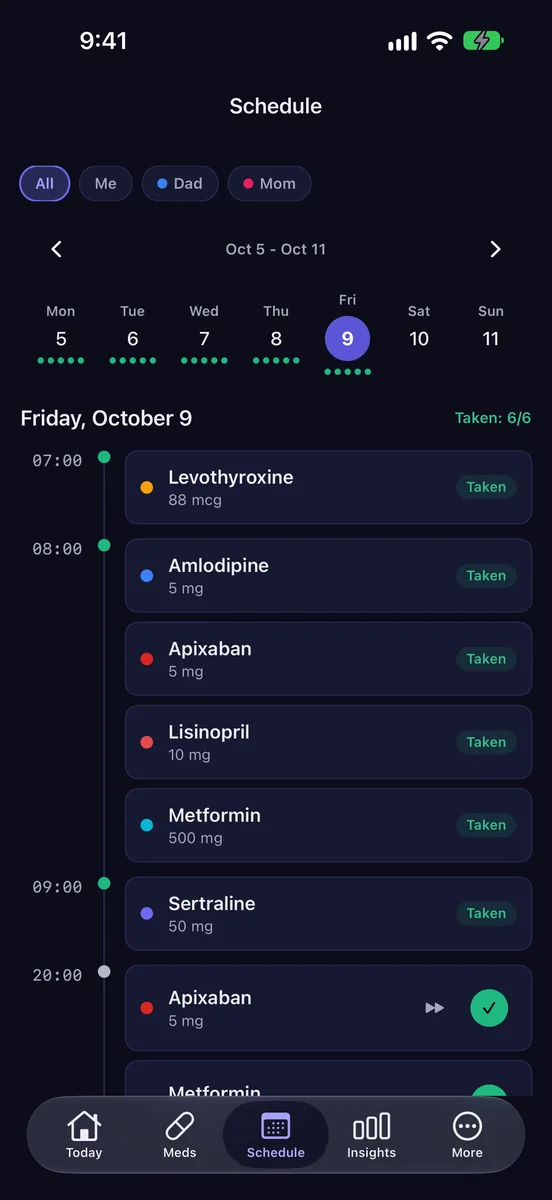
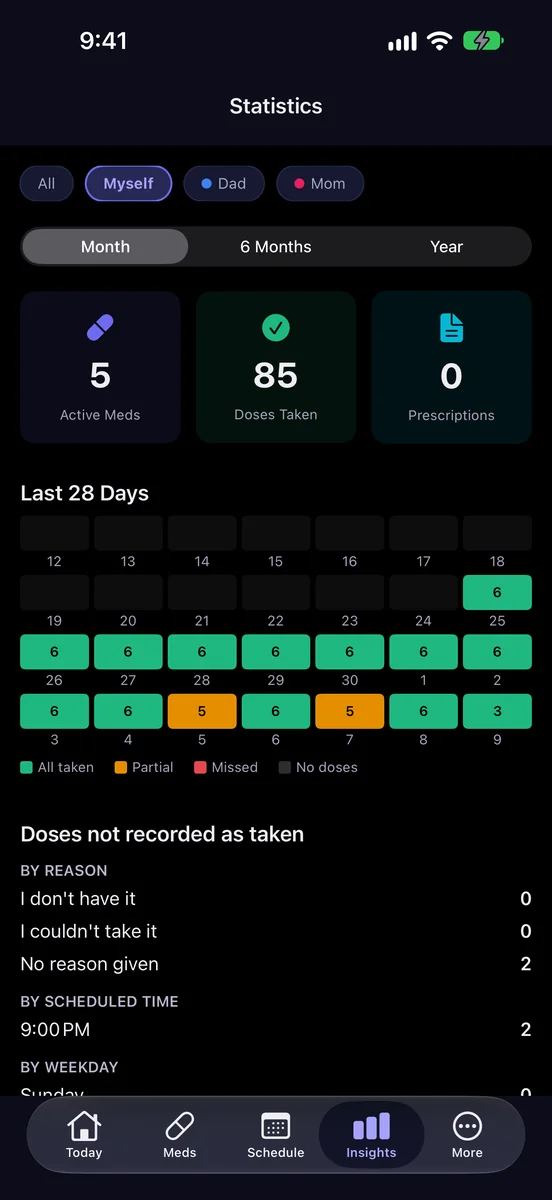
Traveling with medication? ChronoPill flags the internationally controlled substances in your list and, after a time-zone change, asks whether to keep your usual dose times. Travel Mode is part of ChronoPill Premium.
Download ChronoPillRead the filing (PDF)
Turkey's own declared rules for travellers carrying controlled medicines, including the required documents, live in the country's official INCB filing (28 November 2017): read the filing (PDF). This page summarizes context around it; the filing and the national authorities it names are authoritative.
Substances worth checking before you pack
Turkey publishes no traveller list of named substances in the sources consulted: its customs texts speak of medicines used in personal treatment, its INCB filing of medicines containing controlled substances, with specific rules for methadone and for cannabis-based medicines. Domestically, narcotic medicines are dispensed on a red prescription and psychotropic medicines on a green prescription under Ministry of Health circulars of 1985 and 1986, and the Turkish Medicines and Medical Devices Agency assigns medicines to these categories by circular. The table therefore pairs the INCB status of common substances with what the Turkish texts say for their category: a starting point for your pharmacist, not a ruling.
| Active substance | International status (INCB) | Under Turkish rules |
|---|---|---|
| Morphine, oxycodone, fentanyl, hydrocodone | 1961 narcotic (Yellow List) | Narcotic drugs. The Turkish embassy in Belgrade, relaying customs circular 2011/39, makes the entry of medication with narcotic content conditional upon a report from a health institution or a doctor, or a prescription, stating the properties of the medicine and the dose needed during the stay; the INCB filing expects travellers to carry only the amount needed for the stay; law 2313 of 1933 makes the import of narcotic substances subject to Ministry of Health documents. Narcotic medicines are dispensed in Turkey on a red prescription. No number of days is stated for these substances. |
| Methadone | 1961 narcotic (Yellow List) | The INCB filing sets 15 days for methadone, asks for the INCB model certificate for travellers under treatment, declared to border control on arrival, and sends a patient staying longer than 15 days to an Alcohol and Substance Dependence Treatment Center in Turkey; the Ministry of Health statement relayed by the embassy in Belgrade says the same. |
| Codeine, dihydrocodeine, pholcodine | 1961 narcotic (Yellow List) | Same convention category, common in cough and cold products. The Turkish traveller texts consulted do not name them: ask the Turkish Medicines and Medical Devices Agency or a Turkish pharmacist. |
| Diazepam, alprazolam, lorazepam, clonazepam, zolpidem, midazolam, phenobarbital | 1971 psychotropic (Green List) | Psychotropic substances, dispensed in Turkey on a green prescription (Ministry of Health circular of 2 January 1986; the agency placed midazolam injections under it in 2015). The traveller texts set no rule beyond the general one: report or prescription, reasonable quantity for the stay. |
| Methylphenidate, amfetamine, dexamfetamine, lisdexamfetamine | Methylphenidate, amfetamine, dexamfetamine: 1971 psychotropic (Green List); lisdexamfetamine not listed | Not named in the Turkish traveller texts consulted: the general rule applies. Ask the agency which prescription category applies before travel. |
| Buprenorphine | 1971 psychotropic (Green List) | The agency placed buprenorphine and naloxone sublingual tablets under the red prescription in 2015, prescribed on a report from a substance-dependence treatment centre. Not named in the traveller texts: ask the agency before travel. |
| Tramadol, pregabalin, gabapentin | Not on the INCB lists | Controlled nationally: the agency placed a tramadol injection under the green prescription in 2016 as a controlled substance, and its list of monitored medicines dispensed on a normal prescription names pregabalin and gabapentin products (list undated). The traveller texts do not name them: the general rule applies. |
| Modafinil | Not on the INCB lists | Classed by the agency in 2016 as a controlled medicine dispensed on a normal prescription, indicated for narcolepsy. The general rule applies. |
| Pseudoephedrine, ephedrine | 1988 precursor (Red List) | Named in the agency's list of monitored medicines on normal prescription; not addressed by the traveller texts. The consulate general in Los Angeles writes that most over-the-counter drugs in standard doses are permissible unless otherwise specified. |
| Cannabis, THC and CBD products | Cannabis: 1961 narcotic (Yellow List) | The INCB filing prohibits entering Turkey with cannabis plant, herb or resin; only cannabis-based medical preparations approved by the FDA or the EMA may be brought by travellers under treatment: 31 days, the INCB model certificate translated into English and endorsed by the competent authority of the country of departure, its original sent by that authority to the agency at least 3 days before arrival, declaration at border control, and a Turkish specialist physician when the stay exceeds 31 days. CBD products are not named in the sources consulted. The UK Foreign Office warns of prison sentences of 4 to 24 years for illegal drugs, cannabis included, airport transit included. |
International status: INCB Yellow, Green and Red Lists (editions in Sources), extracted 31 May 2026; Turkish texts read on 4 November 2026.
Advance procedures: the customs rule for personal medicines and the controlled-substance certificates
For medicines carried for personal use, the rule is the customs one. The Council of Ministers' decision 2009/15481 on the application of the Customs Law (article 58 and Annex 9) exempts the passenger's personal goods from duty, and Annex 9 lists 'medicines used in personal treatment' in its section on health devices, beside wheelchairs and personal medical devices. The Ministry of Trade's frequently asked questions for passengers (3 March 2026), repeated in English by the Ministry of Foreign Affairs, say that medicines for personal treatment brought by the passenger, or sent one month before or three months after arrival, are admitted on presentation to the customs office of a document showing they are needed during the stay (a report from a health institution, a doctor's report or a prescription), in a reasonable quantity in view of the length of stay. None of these texts states a number of days or doses. On arrival, travellers take the green lane with nothing to declare or the red lane with goods to declare; the Ministry of Foreign Affairs' customs page notes that using a lane does not make prohibited or restricted goods admissible, and that prohibited goods, goods subject to authorisation or goods beyond the allowance found in your possession expose you to fines or imprisonment. The embassy of Turkey in Belgrade (20 September 2012) describes customs circular 2011/39 in the same terms and adds that medication with narcotic content enters on a report or prescription stating the properties of the medicine and the dose needed during the stay; the consulate general in Los Angeles (18 January 2025) gives no list of admissible foreign medicines, writes that most over-the-counter drugs in standard doses are permissible unless otherwise specified, and advises every visitor to carry a medical report or prescription detailing the purpose and dosage of their medications.
Controlled medicines follow another path. Law 2313 of 1933 on the control of narcotic substances does not let customs admit narcotic substances without an import document, and places the substances of the 1988 Convention tables under Ministry of Health permission; in Turkey, narcotic medicines are dispensed on a red prescription and psychotropic medicines on a green prescription under Ministry of Health circulars of 1985 and 1986, and the Turkish Medicines and Medical Devices Agency (TİTCK) assigns medicines to these categories by circular. Turkey's INCB filing of 28 November 2017 expects travellers under treatment with medicines containing controlled substances to carry only the amount necessary for the duration of stay, sets 15 days for methadone and 31 days for cannabis-based medicines approved by the FDA or the EMA, asks in both cases for the INCB model certificate, declared to border control on arrival, and for cannabis-based medicines requires the original certificate, translated into English and endorsed by the competent authority of the country of departure, to be sent to the agency by that authority at least 3 days before arrival. The national competent authority is the agency's Department of Pharmacovigilance and Controlled Substances, Söğütözü Mahallesi, 2176. Sokak No: 5, 06520 Çankaya, Ankara, telephone +90 312 218 3316. The filing states no fee, no processing time and no quantity for other narcotic or psychotropic medicines. The UK Foreign Office adds that British prescriptions are not accepted in Turkish pharmacies and that some common medicines are controlled in Turkey; the French foreign ministry asks for original packaging and a prescription naming each medicine by its INN. The Turkish embassy or consulate in your country can state which procedure applies to you.
Checklist for Turkey
- List the active substance (INN) of every medication you plan to carry, prescription and over-the-counter alike.
- Ask your pharmacist which of them are narcotic drugs or psychotropic substances under the UN conventions, and which Turkey controls nationally (tramadol, pregabalin, gabapentin and modafinil appear in the agency's circulars and lists).
- Read Turkey's official INCB filing (linked above): the amount for the stay, 15 days for methadone, 31 days for cannabis-based medicines with the certificate sent to the agency 3 days before arrival.
- Carry a medical report or prescription naming each medicine, its properties and the dose for your stay, as the customs texts and the embassy note ask, and keep the quantity reasonable for the length of stay, in original packaging.
- For a narcotic or psychotropic medicine, write to the agency's Department of Pharmacovigilance and Controlled Substances well before departure; for methadone or a cannabis-based medicine, obtain the INCB model certificate and declare it to border control on arrival.
- On arrival, take the red lane if you carry goods subject to authorisation or are unsure; the UK Foreign Office notes that British prescriptions are not accepted in Turkish pharmacies: ask your prescriber what that means for your supply.
- For any doubt, the Turkish embassy or consulate in your country is the authoritative contact before departure.
How ChronoPill's Travel Mode helps
ChronoPill offers the official medication databases of 7 countries as offline packs: 500,000+ records, downloaded once, then usable without a connection. When you set a destination, Travel Mode:
- Flags medications in your list whose active substance is internationally controlled, and names the substance
- Lists the products with the same active substance (INN) in the destination's official registry, with their local names, for information only
- Generates a pharmacist card you can hand over at any counter abroad
- After a time-zone change, asks whether to keep your usual clock times or the same moments as at home
Travel alerts are informative only: they tell you which substance to verify and with whom (your pharmacist, the destination's consulate). They never tell you to skip a dose or leave a medication behind. Travel Mode is part of ChronoPill Premium.
Frequently asked questions
Is codeine controlled in Turkey?
Codeine is a 1961 Single Convention narcotic (INCB Yellow List). The Turkish traveller texts consulted do not name it: the customs rule applies to any medicine for personal treatment (medical report or prescription, reasonable quantity for the stay), and the embassy note on circular 2011/39 asks, for medication with narcotic content, for a report or prescription stating the properties of the medicine and the dose needed during the stay.
Whether a given codeine product, cough syrups included, counts as narcotic in Turkey is for the Turkish authorities to say: ask the Turkish Medicines and Medical Devices Agency or the Turkish embassy or consulate, and your pharmacist for the composition.
What document do Turkish customs ask for with personal medicines?
A document showing that the medicines are needed during your stay: a report from a health institution, a doctor's report or a prescription, presented to the customs office. With it, medicines for personal treatment, listed among the passenger's personal goods of Annex 9, enter free of duty, brought with you or sent one month before or three months after your arrival, in a reasonable quantity in view of the length of stay (Ministry of Trade, 3 March 2026).
No number of days or doses is stated in the customs texts. The consulate general in Los Angeles advises a medical report or prescription detailing the purpose and dosage of each medication; for narcotic or psychotropic medicines, see the INCB filing and the agency.
Are ADHD medications and benzodiazepines restricted in Turkey?
Methylphenidate, amfetamine and dexamfetamine, like diazepam, alprazolam, lorazepam, clonazepam and zolpidem, are psychotropic substances under the 1971 Convention (INCB Green List). In Turkey, psychotropic medicines are dispensed on a green prescription under the Ministry of Health circular of 2 January 1986, and narcotic medicines on a red prescription; the traveller texts consulted do not name these substances and set no rule beyond the general one: report or prescription, reasonable quantity for the stay.
Lisdexamfetamine is not on the INCB lists and is not named in the Turkish sources consulted. Discuss your trip with your prescriber and write to the agency's Department of Pharmacovigilance and Controlled Substances well before travel.
Can I bring methadone or a cannabis-based medicine into Turkey?
Turkey's INCB filing answers both. Methadone: 15 days, the INCB model certificate for travellers under treatment, declared to border control on arrival, and an Alcohol and Substance Dependence Treatment Center in Turkey when the stay exceeds 15 days. Cannabis plant, herb or resin are prohibited; only cannabis-based medical preparations approved by the FDA or the EMA may be brought by a traveller under treatment: 31 days, the INCB model certificate translated into English and endorsed by the competent authority of your country, its original sent by that authority to the Turkish Medicines and Medical Devices Agency at least 3 days before arrival, declaration at border control, and a Turkish specialist physician when the stay exceeds 31 days.
The filing states no fee or processing time. CBD products are not named in the sources consulted; the UK Foreign Office warns of 4 to 24 years' prison for illegal drugs, cannabis included. Ask the Turkish embassy or consulate before packing any cannabis-derived product.
Sources
Sources of every claim on this page, each consulted on 2026-11-04; INCB list membership extracted on 31 May 2026.
- INCB filing, Republic of Türkiye, 28 November 2017: official PDF (English) · country index. Consulted 2026-11-04.
- Republic of Türkiye, Ministry of Trade (Ticaret Bakanlığı): Yolcu Muafiyetleri, frequently asked questions for passengers, 3 March 2026 (Turkish; question 7 and Annex 9) · Yolcu Muafiyeti Bilgilendirme Broşürü, passenger exemptions leaflet (PDF, Turkish). Consulted 2026-11-04.
- Resmî Gazete, 7 October 2009: Council of Ministers' decision 2009/15481 on the application of certain articles of Customs Law 4458, article 58 and Annex 9 (Turkish); the one-month and three-month periods are those of the ministry's current texts. Consulted 2026-11-04.
- Republic of Türkiye, Ministry of Foreign Affairs: Information on Turkish Customs (English, question 7 and Annex 9) · Embassy in Belgrade, Announcement on Turkish customs regulation on medication, 20 September 2012 · Consulate General in Los Angeles, Guidance for bringing medication to Türkiye, 18 January 2025. Consulted 2026-11-04.
- Mevzuat Bilgi Sistemi: law 2313 of 12 June 1933 on the control of narcotic substances, consolidated text, articles 4, 5 and additional article 1 (PDF, Turkish). Consulted 2026-11-04.
- Turkish Medicines and Medical Devices Agency (TİTCK), circulars on controlled medicines (PDF, Turkish): buprenorphine and naloxone tablets on red prescription, 14 January 2015 · midazolam injections on green prescription, 2 December 2015 · modafinil as a controlled medicine on normal prescription, 25 January 2016 · tramadol injection on green prescription, 20 February 2016 · list of monitored medicines dispensed on a normal prescription (undated) · coloured prescription system instruction, 25 January 2018. Consulted 2026-11-04.
- United Kingdom, FCDO travel advice Turkey, updated 27 October 2026: Health · Safety and security. Consulted 2026-11-04.
- France, Ministère de l'Europe et des Affaires étrangères, Conseils aux voyageurs Turquie, updated 15 September 2026: Santé. Consulted 2026-11-04.
- INCB Yellow List, 64th edition: official PDF · list page
- INCB Green List, 2026 edition: official PDF · list page
- INCB Red List (precursors): official PDF · list page
ChronoPill is not a medical device and this page is not legal or medical advice. It is an informational summary of publicly available regulatory sources. Rules change, and the only authoritative answers come from the destination country's authorities. Before traveling, confirm every point that matters to you with your pharmacist and with the destination country's consulate or embassy.